Roster decisions move at a new speed. Is your staff still doing things the old way?
Look like the program that can run modern basketball as a business, with coaches who are ready for the next seat.
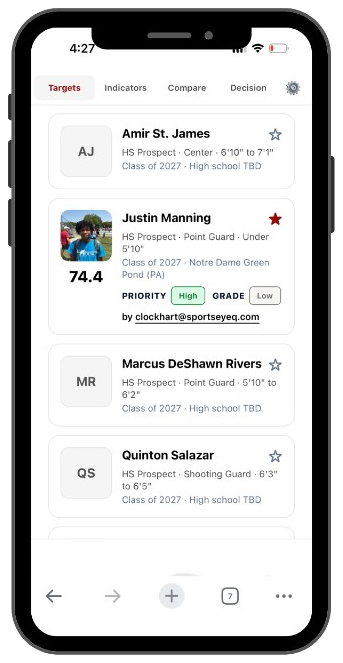
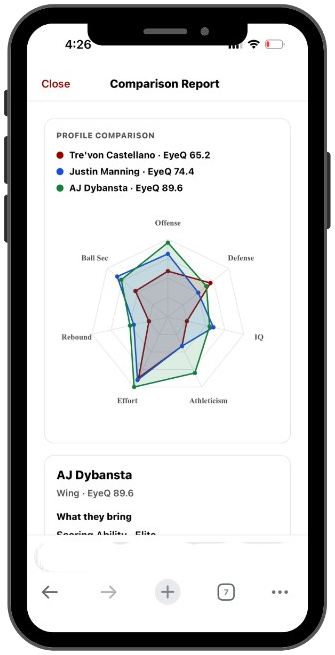
The coach’s eye is the most important skill in the operation.
Done courtside or on film, the evaluation is what puts the operation in motion. The Basketball Business System turns that evaluation into a shared staff language for talent, recruiting priority, and compensation.
That is the vehicle. One evaluation. One staff language. Roster decisions made with the eye and the money in the same place.
The business got bigger. Staffs need a resource that matches it.
NIL, revenue share, and portal speed raised the stakes and the speed of every roster decision. Coaches already knew basketball was a business. What changed is the degree. The Basketball Business System exists to run that operation: eye, recruiting plan, and money moving together.
Three things that keep programs from stepping in. None of them hold.
A “fine” process is not big-business scale.
Keeping paperwork moving is not the same as running the business of basketball at the degree the job now demands. If the goal is roster outcomes and career outcomes, the resource has to be built for that scale on purpose.
Your level is not the filter.
If you evaluate players, you’re in. If you also spend roster dollars, the need is sharper. Level and headcount are not.
One evaluation does more of the work.
Talent, recruiting priority, and compensation move from the evaluation itself. You get more out of the evaluation you already run. Nothing extra on the plate.
Built for the people carrying the recruiting load.
You hired evaluators, not report writers.
Your staff sees the game differently. That is why you hired them. When a coach evaluates, the room gets the evaluation, the recruiting priority, and the business picture in the same system.
Same conversation. Same picture.
When you need the money and the coach’s eye in one place: cost, talent, and priority together.
Your eye. Your board. Your seat.
Personal accounts for people who evaluate on their own: independent scouts, agencies, and management groups who need the same system without a full college staff install.
Your coaches already know who’s good. The Basketball Business System captures that eye, kills the paperwork around it, and never touches the judgment.The line we will not cross
Join the staffs built to run the business at this scale.
Same eye. Same judgment. The money you already have goes to the right players. Programs and individual scouting seats. Ten minutes is enough to know whether it fits.